Source Fireproof Acoustic Foam for Music Rooms, Studios, and Offices
Explore 30 listings of fireproof acoustic foam available from suppliers in China. Buyers can compare specifications such as density, thickness, and fire ratings like B2 and E1 for use in music rooms, studios, and interior spaces.
Key considerations
Products List




Comprehensive Sourcing Guide
Strategic Sourcing Guide for Fireproof Acoustic Foam
Understanding Technical Specifications and Material Composition
When sourcing fireproof acoustic foam, the primary objective is to identify materials that balance sound absorption with rigorous safety standards. The core material for these products is typically polyurethane, a synthetic polymer known for its versatility in acoustic applications. Buyers must scrutinize the density specifications, as this metric directly influences both the acoustic performance and the structural integrity of the panel. The observed market data indicates a wide range of apparent densities, specifically noted between 12 and 96 kg/m³. This variance suggests that procurement strategies should be tailored to the specific acoustic requirements of the project; higher density foams generally offer better low-frequency absorption but may come with increased weight and cost implications.
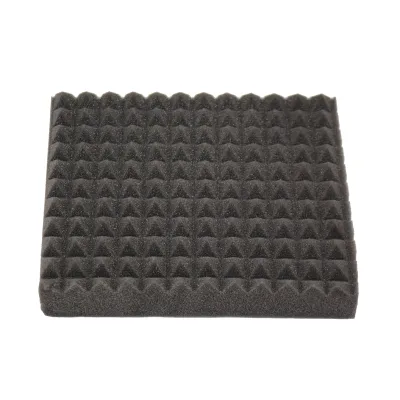
Shape and surface treatment are equally critical technical parameters. The product landscape includes wedge, wave, pyramid, and flat profiles, with wedge shapes being a prominent configuration for optimizing surface area and sound diffusion. The thickness of these panels is a variable specification, with observed ranges extending from 1 inch (approximately 25mm) up to 100mm. Thicker panels typically provide superior low-frequency absorption, while thinner variants are often used for high-frequency treatment or where space is constrained. The edge finishing also varies, with options including beveled and square edges, which can affect the aesthetic continuity of the installation and the ease of fitting panels together.
The physical dimensions of the sheets are another essential consideration. Standard sheet sizes observed in the market include 10002000mm, while custom dimensions are frequently available to meet specific architectural needs. Additionally, some product lines offer modular sizes such as 12121 inch or 1212*2 inch tiles, which facilitate easier handling and installation in smaller rooms or specific equipment enclosures. Buyers should verify the exact sheet size and thickness against their acoustic modeling software to ensure the selected product meets the Noise Reduction Coefficient (NRC) requirements for the intended space.
Compliance, Certification, and Fire Safety Standards
Fire safety is the defining characteristic of "fireproof" acoustic foam, yet the terminology requires precise interpretation. In the context of the available data, the fireproof grade is listed as B2. This classification indicates a specific level of flammability resistance, but it is distinct from non-combustible materials. Procurement teams must understand that B2-rated foams are designed to resist ignition and slow the spread of flame rather than being completely fireproof in the absolute sense. Relying solely on the term "fireproof" without verifying the specific grade can lead to compliance failures in regulated environments.
Certification documentation serves as the primary evidence of a product's safety claims. The observed market data highlights RoHS (Restriction of Hazardous Substances) as a common certification, ensuring the material does not contain specific hazardous chemicals. Furthermore, some suppliers provide SGS certification, which often involves independent third-party testing of fire performance and material composition. It is also noted that some products carry an E1 environmental certification, indicating low formaldehyde emissions, which is crucial for indoor air quality in occupied spaces like music rooms or offices.
Buyers must be vigilant regarding the distinction between different fire standards. While the provided context mentions ASTM E84 and UL 723 as background standards, these are not explicitly confirmed as satisfied by every listed product. Therefore, the procurement strategy should mandate that suppliers provide current, project-specific test reports for the specific fire standard required by local building codes. Relying on general certifications like RoHS is insufficient for fire safety compliance; specific fire rating certificates corresponding to the jurisdiction's regulations must be requested and verified before placing an order.
Cost Drivers and Pricing Structures
The pricing of fireproof acoustic foam is influenced by a complex interplay of material density, thickness, surface treatment, and order volume. The observed price range in the market spans from $0.10 to $200 per unit, a variance that reflects the diversity of product configurations. Lower-cost items typically correspond to standard thicknesses (such as 1 inch) and lower density ranges, while premium pricing is associated with custom dimensions, higher density foams, or specialized surface treatments like full-body tiles.
Minimum Order Quantity (MOQ) is a significant cost driver in the acoustic foam sector. The data reveals a wide MOQ spectrum, ranging from as low as 1 piece to as high as 3000 pieces. A specific product line observed has an MOQ of 1200 pieces, while another variant lists 480 pieces. These thresholds directly impact the unit price; larger orders generally secure lower per-unit costs due to economies of scale in production and shipping. Buyers with smaller project requirements may face higher effective costs unless they can consolidate orders or find suppliers with lower MOQ thresholds.
Customization is another factor that influences cost. While customization is available for shape, size, and packaging, it often incurs additional setup fees or higher per-unit costs compared to standard stock items. The availability of free samples is a notable feature in the market, allowing buyers to evaluate quality without immediate financial commitment. However, buyers should be aware that while samples may be free, shipping costs are often the responsibility of the purchaser. Understanding the relationship between density, thickness, and MOQ is essential for budgeting accurately, as a high-density, thick panel with a high MOQ will naturally command a higher total investment than a standard, thin, low-density alternative.
Typical Applications and Performance Expectations
Fireproof acoustic foam is versatile and finds application in a variety of environments where sound control and safety are paramount. The observed usage cases include music rooms, interior wall treatments, machine enclosures, and general room acoustics. In music rooms, the foam's ability to dampen reflections and control reverberation is critical for achieving a clear listening environment. The performance attributes listed, such as soundproof, fireproof, protective, and anti-collision, suggest that these materials are suitable for high-traffic areas or spaces where equipment is stored, providing both acoustic and physical protection.
The installation method is another consideration for application suitability. The data indicates that adhesive application is a standard method, which simplifies the installation process for interior tiles and wall panels. This adhesive-based approach allows for a seamless aesthetic finish, which is often desired in commercial and residential settings. However, the specific adhesive requirements should be verified, as the surface treatment (e.g., wedge or pyramid) may influence the bonding strength and the type of adhesive needed.
Performance expectations should be aligned with the specific NRC values and fire ratings. While a specific NRC value of 0.0 is observed in the data, this likely represents a specific configuration or a data entry anomaly, as acoustic foam is inherently designed for sound absorption. Buyers should expect high NRC values for standard wedge or pyramid foams, typically ranging from 0.6 to 0.9 depending on thickness and density. The eco-friendly features, such as the E1 rating, make these products suitable for environments with strict indoor air quality regulations, such as schools, hospitals, and offices. The combination of shockproof and protective attributes also makes them ideal for industrial settings where machinery noise needs to be controlled without compromising safety.
Supplier Evaluation and Quality Control Protocols
Evaluating suppliers for fireproof acoustic foam requires a rigorous approach to verifying claims and ensuring consistency. The origin of the products is a key factor, with the majority of observed listings originating from Jiangsu, China, a region known for its manufacturing capabilities in acoustic materials. Buyers should prioritize suppliers who provide transparent documentation regarding their manufacturing processes and quality control measures. The presence of certifications like SGS and RoHS is a positive indicator, but these should be cross-referenced with the specific product batch to ensure validity.
Quality control should extend beyond the initial certification to include verification of physical attributes. Buyers must confirm that the delivered product matches the specified density, thickness, and shape. Variations in density can significantly alter the acoustic performance, so random sampling and testing upon delivery are recommended. The packaging method, observed as vacuum packaging or carton packaging, also plays a role in quality preservation. Vacuum packaging helps maintain the shape and prevents compression during transit, which is crucial for foam products that rely on their structure for performance.
Lead time and delivery reliability are critical components of supplier evaluation. The observed lead times range from 5 to 10 working days, with some suppliers offering delivery within 7-10 days. Buyers should assess the supplier's ability to meet these timelines consistently, especially for large orders or custom projects. Payment terms, including T/T, Paypal, and Western Union, offer flexibility, but buyers should establish clear terms regarding deposit and balance payments to mitigate financial risk. Additionally, the availability of free samples allows for a pre-purchase quality check, which is an essential step in the supplier evaluation process.
Long-Term Procurement and Operational Considerations
Sourcing fireproof acoustic foam is not merely a transactional activity but a strategic decision that impacts long-term operational efficiency and safety compliance. The customization options available, such as custom diameters and standard sizes like 50x50x5cm, allow for future-proofing of acoustic treatments. As building codes evolve or project requirements change, the ability to source custom-sized panels ensures that the acoustic environment can be adapted without the need for complete replacement.
Maintenance and longevity are also important considerations. The fireproof grade and material composition determine the lifespan of the foam in various environments. While the foam is designed to be fire-resistant, exposure to direct heat sources or extreme conditions may degrade its performance over time. Buyers should consider the environmental conditions of the installation site and select products with appropriate fire ratings and durability features. The eco-friendly nature of the materials, indicated by E1 certification, suggests a lower environmental impact, which aligns with sustainable building practices and may contribute to green building certifications.
Finally, the procurement strategy should account for the potential need for expansion or modification. The wide range of available shapes, including wedge, wave, pyramid, and flat, provides flexibility for future design changes. By establishing a relationship with a reliable supplier who offers a broad range of specifications and customization options, buyers can ensure a steady supply of compatible materials for future projects. This approach minimizes the risk of supply chain disruptions and ensures that the acoustic treatment remains consistent and effective over the long term.
FAQs
What is the fireproof grade of the acoustic foam?
The acoustic foam has a fireproof grade of B2. This classification indicates resistance to ignition and slow flame spread rather than being completely non-combustible, requiring verification against local building codes.
Which certifications are available for these panels?
Available certifications include RoHS and SGS. Some products also carry E1 environmental certification for low formaldehyde emissions, ensuring safety for indoor air quality in occupied spaces like music rooms.
How is the acoustic foam typically packaged?
The foam is typically packaged in vacuum packaging or cartons. Vacuum packaging helps maintain the shape and prevents compression during transit, which is crucial for foam products relying on their structure.
Can I customize the dimensions of the panels?
Yes, customization is available for shape, size, and packaging. Standard sizes include 1000*2000mm sheets or 12*12*1 inch tiles, but custom diameters and thicknesses can be requested to meet specific architectural needs.
What is the lead time for delivery?
The delivery time ranges from 5 to 10 working days. Specific suppliers may offer lead times of 7-10 working days, depending on order volume and customization requirements.
What is the minimum order quantity for these products?
Minimum order quantities vary, with observed ranges from 1 to 3000 pieces. Specific product lines list MOQs of 480 pieces or 1200 pieces, impacting unit pricing and procurement strategy.
Where are these acoustic foam products manufactured?
The products originate from Jiangsu, China. This region is known for its manufacturing capabilities in acoustic materials, and buyers should verify specific factory details for quality assurance.